
The short answer: They might. Nobody has shown whether oral zeolite detox supplements interfere with prescription drugs or essential minerals in people, and that silence isn’t reassurance. If you take medication, are pregnant, or manage iron, calcium, potassium, or any other mineral-related condition, talk to your pharmacist or clinician before you try a binding supplement. No article and no product label can run that check for you.
Table of Contents
Key Takeaways
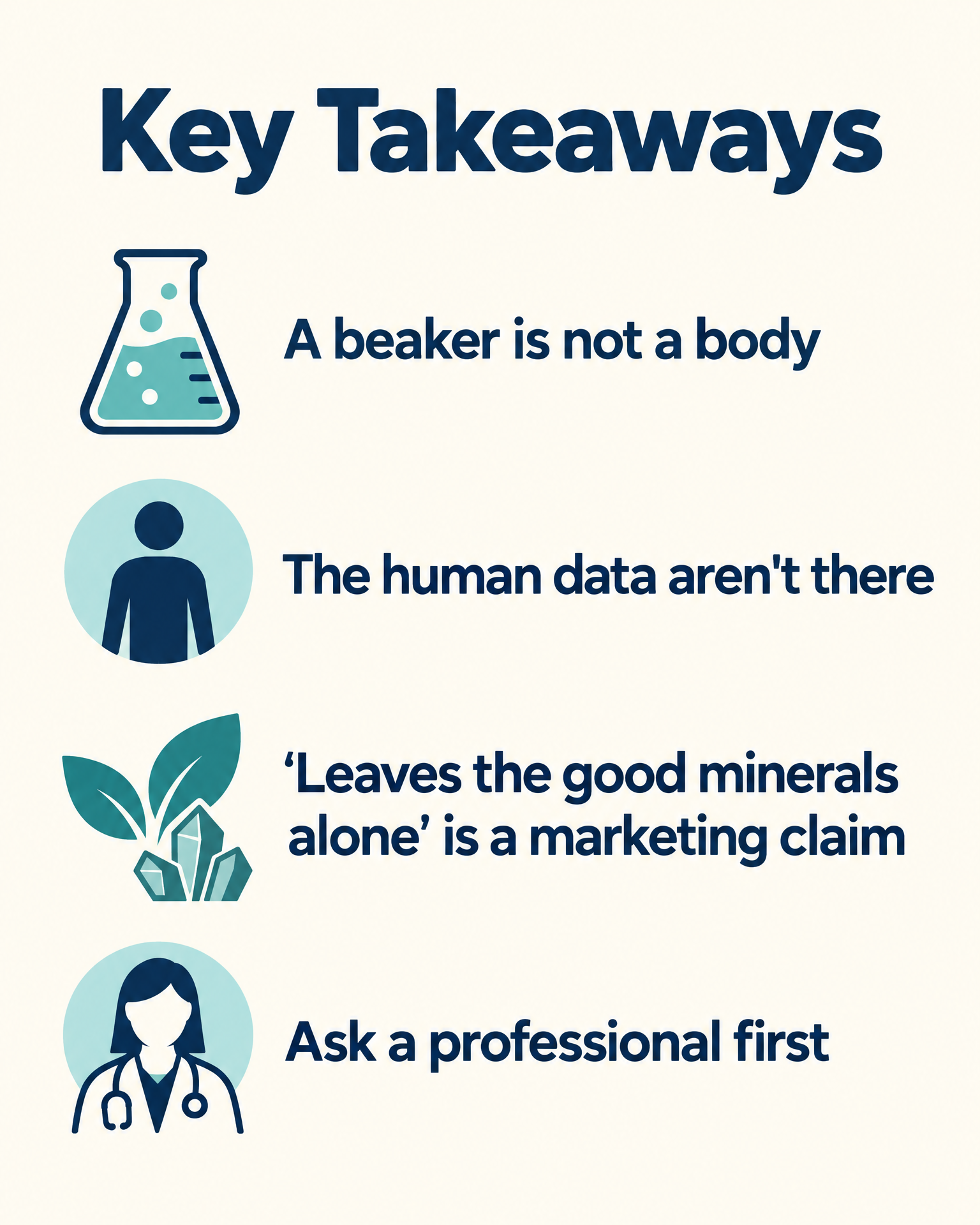
- The worry is reasonable. Zeolite is sold because it attracts positively charged ions in liquid. Your digestive tract is a liquid environment, and it also holds dissolved minerals and whatever medication you swallowed this morning.
- A beaker is not a body. Selectivity shown in a laboratory doesn’t guarantee selectivity inside a person.
- The human data aren’t there. Product-specific interaction studies for oral zeolite detox supplements are lacking, and a lack of documented interactions is not proof of safety.
- Prescription chelators are the cautionary example. Their drug and mineral interactions are well documented, which is one reason they’re medically supervised.
- “Leaves the good minerals alone” is a marketing claim. No one has verified it in humans.
- Ask a professional first. That goes double if you take medication, are pregnant, or manage a mineral-related condition.
The Question the Product Page Never Answers
Picture yourself in the supplement aisle, or scrolling a product page late at night. At home, a pill organizer sits on the counter. Maybe it holds a thyroid tablet, a blood pressure medication, the iron your doctor suggested. And a quiet voice asks: if this thing grabs onto stuff in my gut, what exactly is it grabbing?
Trust that instinct. It’s sound, and it’s the question marketing copy almost never answers.
What zeolite is supposed to do
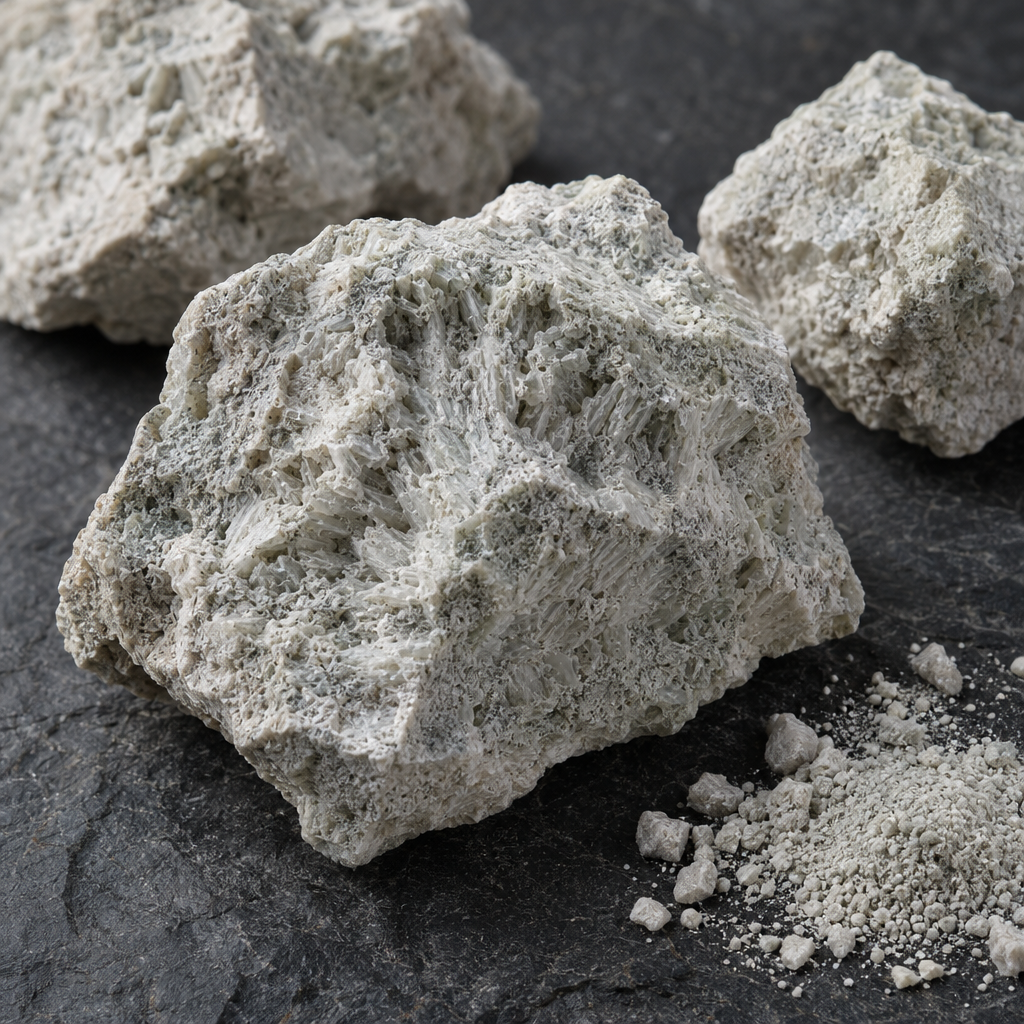
Zeolites are crystalline aluminosilicate minerals with a porous, cage-like structure. Clinoptilolite, the form most common in supplements, is known in the chemistry literature for cation exchange and adsorption. It can trap or swap positively charged ions (cations) in a liquid. Detox marketing leans heavily on that property. For how the claim holds up when the target is toxic metals in the body, see our article on whether zeolite removes heavy metals from the human body.
Why your gut makes this complicated

The digestive tract isn’t an empty beaker. It’s crowded with things that carry a positive charge or behave as if they do, and your body generally wants to keep them:
- Dissolved essential minerals: calcium, magnesium, potassium, zinc, copper, and iron in its ionic forms.
- Oral medications: many drugs dissolve in stomach and intestinal fluid before they’re absorbed, and some interact with minerals or surfaces along the way.
A material that interacts with charged particles in liquid has no built-in way to tell a mineral you need from one you don’t, or a drug dose you depend on from a stray particle. Exchange can also run both ways. Zeolites usually arrive carrying exchangeable ions of their own, so what happens in a real gut depends on what the material holds, what it meets, and what trades places.
The beaker problem
In a beaker, selectivity is measured under tidy conditions: known concentrations, a fixed pH, a clean solution. The gut is nothing like that. It has shifting acidity, food, bile, enzymes, mucus, bacteria, changing transit times, and medications at precise doses. A result from one setting doesn’t carry over to the other. It’s a reason to run a human study, not a stand-in for one.
So What Does the Evidence Actually Say?
Here’s the honest version, uncertainty left in.
The human interaction studies don’t exist, at least not yet
We aren’t aware of well-designed human studies testing whether commercial oral zeolite detox supplements change the absorption or blood levels of specific prescription drugs, or alter mineral status in the people taking them. Some small human and animal studies have looked at tolerability or other outcomes for particular products. That’s a different question from whether a product interferes with your levothyroxine or your potassium level. Formulations vary too, with different processing, particle sizes, and added ingredients.
Silence isn’t safety
It’s easy to misread a lack of reported problems. It could mean there’s no interaction. It could just as easily mean nobody has looked, or that interactions are subtle, limited to certain drugs, or going unrecognized. Many drug interactions surface only through deliberate pharmacokinetic studies, never through casual use.
| What you may see | What it actually tells you |
|---|---|
| “No known interactions” | Often means none have been studied, not that none exist |
| “Safe for most people” | Not the same as tested alongside your medications |
| “Customer testimonials” | Can’t detect a slow drop in a drug level or a mineral lab value |
| “Natural mineral” | Doesn’t determine whether it interacts with medications |
What other binders have taught us (an analogy, not proof)
Clinicians already know that anything that binds or adsorbs in the gut can affect other substances:
- Bile acid sequestrants such as cholestyramine can reduce the absorption of several co-administered drugs.
- Activated charcoal adsorbs many ingested compounds. That’s why it’s used in certain poisonings, and why nobody takes it casually alongside medication.
- Mineral-containing products such as antacids and calcium, iron, and magnesium supplements can reduce the absorption of certain drugs, including some antibiotics and thyroid medication, by binding them in the gut.
What this shows is that binding-type interactions are a recognized category of problem. It doesn’t show that zeolite causes them, how strong they’d be, or which drugs would be affected. That’s exactly the work a pharmacist can help with, and it’s why we won’t hand you a “safe” schedule here.
What Happens When Binding Is Taken Seriously
This contrast may be the most revealing part of the whole story.
Chelating drugs prescribed for diagnosed metal poisoning or overload, including succimer (DMSA), dimercaprol, calcium disodium EDTA, deferoxamine, and deferasirox, have been studied and carry documented warnings. Depending on the drug, those include:
- Increased urinary loss of essential minerals such as zinc, copper, calcium, or iron.
- Risk of dangerous mineral imbalances if the wrong form or dose is used.
- Requirements for kidney, liver, or blood-count monitoring.
- Specific cautions about combining them with other drugs or mineral products.
We know these interactions because the drugs were studied in people, under medical supervision, for defined conditions. That evidence base is part of why clinicians prescribe, dose, and monitor them instead of leaving the choice to the patient. A diagnosis comes first, often through testing, and our guide to heavy metal testing explains what that involves.
The point isn’t that zeolite behaves like these drugs. It’s a different material with a different mechanism and a different regulatory status. The point is that when a substance’s job is to bind metals, mineral and drug interactions are an expected question. For prescription chelators, the answers were found and written down. For oral zeolite supplements, they largely haven’t been. Our comparison of chelation therapy and commercial detox supplements covers the wider differences in evidence and oversight.
Iron, Calcium, Potassium: What’s Really at Stake
Some brands say or imply that their product removes “toxins” while leaving the beneficial minerals untouched. Think about what that claim demands. A supplement would have to tell harmful metals apart from calcium, iron, potassium, magnesium, zinc, and copper inside a living gut, consistently, at real-world doses, in people with different diets and different health conditions. That’s a marketing claim without human verification, not an established finding. If it had been demonstrated, you’d expect human studies measuring mineral status before and after use, not just laboratory binding data.
Why these minerals matter to particular readers
You don’t have to assume harm to see why these minerals deserve care:
- Iron: People with iron-deficiency anemia, heavy menstrual bleeding, or pregnancy, and those on iron therapy, depend on adequate absorption. People with iron overload face the opposite concern. Either way, it’s a balance a clinician manages.
- Calcium: Bone health, osteoporosis treatment, and certain parathyroid or kidney conditions all involve careful calcium management. Some osteoporosis and thyroid drugs are themselves sensitive to minerals in the gut.
- Potassium: Levels that run too high or too low can affect heart rhythm. Diuretics, ACE inhibitors, ARBs, and kidney disease all push potassium in different directions.
- Magnesium, zinc, and copper: These support nerve, muscle, immune, and enzyme function, and shortfalls are common in people with digestive conditions or restricted diets.
If you’re managing any of these, a supplement with unverified effects on mineral availability adds uncertainty to something your care team is working to keep steady. Whether it matters for you is something a general article can’t determine.
The quiet part: you may never feel it
Shifts in mineral status or drug levels often produce no obvious symptoms until they’re significant. Fatigue, palpitations, cramps, or a creeping lab value could come from a dozen causes, and a supplement is easy to forget on that list. That’s why your clinician should hear about everything you take.
Is This You? Who Needs to Be Extra Careful
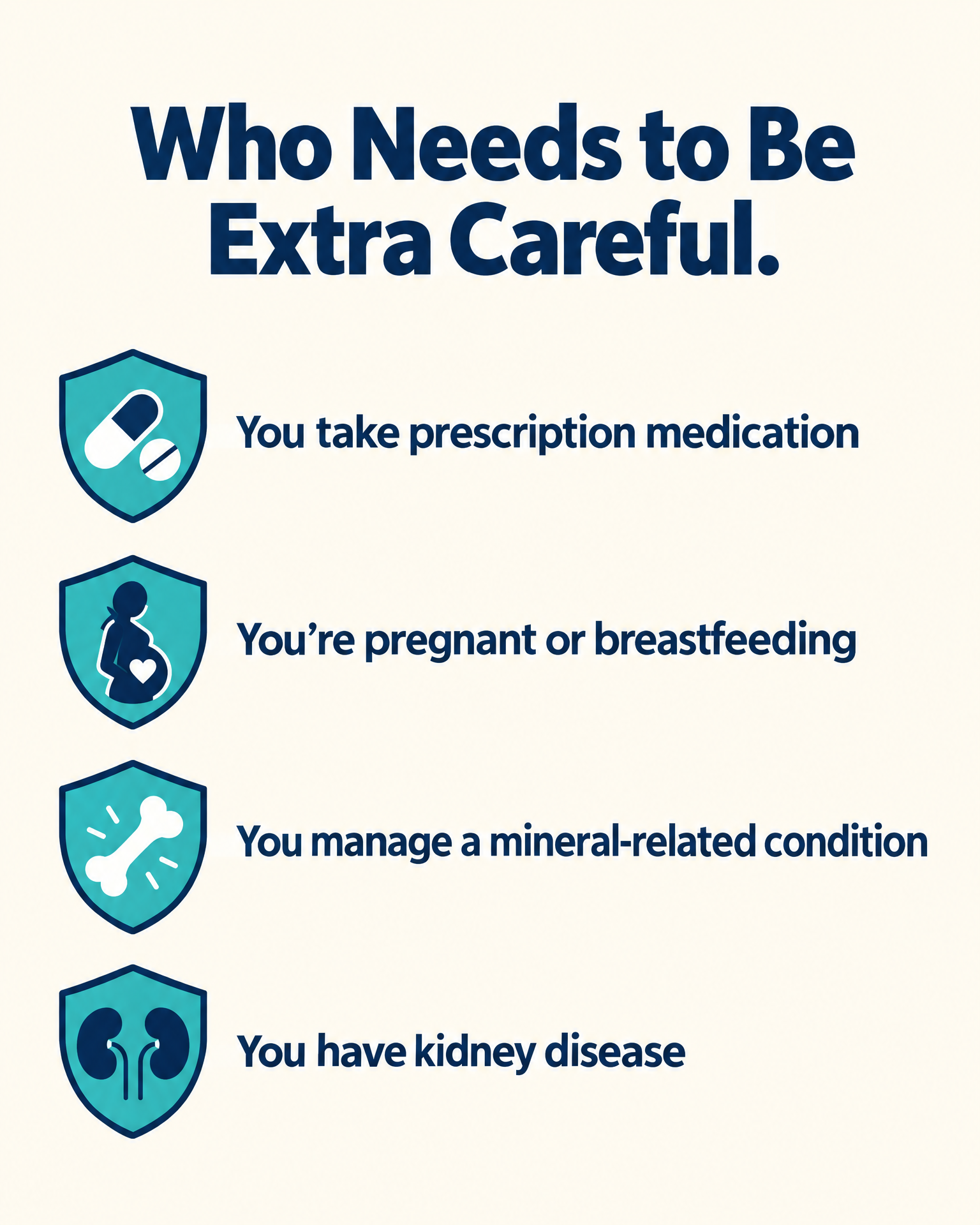
Bring the question to a pharmacist or clinician first if any of these fit:
- You take prescription medication, especially drugs where small changes in blood level matter: thyroid hormone, anticoagulants, heart medications, seizure medications, immunosuppressants, and certain antibiotics. (These are categories where precision matters, not a claim that zeolite affects them.)
- You’re pregnant, trying to conceive, or breastfeeding.
- You manage a mineral-related condition, such as anemia, iron overload, osteoporosis, a parathyroid disorder, or abnormal potassium or magnesium levels.
- You have kidney disease. The kidneys regulate minerals and clear many drugs, and aluminum exposure is a consideration when kidney function is reduced.
- You have a digestive condition or have had bariatric surgery, either of which can already change how you absorb things.
- You’re giving anything to a child, or you’re an older adult taking several medications.
What to Say at the Pharmacy Counter
A pharmacist is often the easiest professional to reach, and the conversation is usually free. A few questions keep it focused:
- “Here’s the exact product and its ingredient list. Does anything in it worry you, given my medications?”
- “Is there a documented interaction risk between binding or adsorbent supplements and any of my prescriptions?”
- “With my condition, should my mineral levels or drug levels be monitored if I use this?”
- “Is there a safer way to deal with the worry that’s making me consider it?”
- “Has this product been third-party tested for contaminants, and does that matter in my case?”
Bring the actual bottle, or at least a photo of the label. Whatever answer you get will be shaped around your medications, your doses, and your health history, which no general article can do.
“But I’m Worried About Toxins. Doesn’t That Justify the Risk?”
If what’s driving you is a fear of heavy metal exposure, the most useful first step is usually to find out whether there’s an exposure at all. That means appropriate testing, interpreted by a clinician, and tracing and reducing the source where possible. Our heavy metal testing guide walks through what testing can and can’t tell you. Guessing and self-treating with a binding supplement skips the step that shows whether any treatment is needed, and it stacks interaction questions on top of an uncertain benefit.
Frequently Asked Questions
Could zeolite mess with my prescriptions?
Possibly. In principle, yes: zeolite interacts with charged particles in liquid, and other binding agents are known to affect drug absorption. But product-specific human interaction studies for oral zeolite detox supplements are lacking, so no one knows how much interference, if any, to expect. Check with a pharmacist or clinician before combining them.
Will it strip out the calcium, iron, or potassium I actually need?
No one has verified that either way in humans. Brands often say beneficial minerals are left alone, but that’s a marketing claim without human verification. If you manage your mineral levels, talk to your clinician first.
I can’t find any warnings about interactions. Doesn’t that mean it’s fine?
Not necessarily. A lack of documented interactions can reflect a lack of research rather than a lack of risk.
Why do chelation drugs come with so many interaction warnings?
Because they’ve been studied in clinical settings, in people with diagnosed conditions. Their documented effects on minerals and other drugs are part of why they’re medically supervised.
Is it okay to take zeolite while pregnant or breastfeeding?
There’s no adequate human safety evidence we can point to for this situation. If you’re pregnant or breastfeeding, ask your clinician before using any binding supplement.
Do I really need to mention supplements to my doctor?
Yes, all of them, even the “natural” ones. It helps your clinician read your lab results and your response to medication accurately.
Is there a safe way to space zeolite away from my medications?
We don’t offer a timing or spacing protocol, because none has been established for these products, and the right answer depends on your specific drugs and health. A pharmacist or clinician is the right person to ask.
This article is for general information and is not medical advice. It does not diagnose, treat, or recommend any product. Do not start, stop, or change any medication or supplement without consulting a qualified healthcare professional.
Products / Tools / Resources
None of these will replace a conversation with your pharmacist, but they’ll make that conversation sharper.
Tools worth having
- A weekly pill organizer. If you already use one, keep a written list beside it of every supplement you take, not just prescriptions. Seeing everything in one place makes gaps and overlaps obvious.
- A running medication and supplement list. A notes app or an index card in your wallet works. Include product names, doses, and how often you take each one, and bring it to every appointment.
- A free drug-interaction checker. Tools such as the one on Drugs.com or Medscape can flag known prescription-to-prescription and drug-to-supplement interactions. Treat the results as a starting point. Many supplements, including oral zeolite products, simply won’t appear in the data, and “nothing found” isn’t the same as “nothing there.”
Where to read next
- Does zeolite remove heavy metals from the human body? A closer look at the claim at the center of most detox marketing.
- Heavy metal testing guide What testing measures, what it misses, and why it should come before treatment.
- Chelation therapy vs. commercial detox supplements How evidence and oversight differ between the two.
- NIH Office of Dietary Supplements fact sheets. Plain-language profiles of individual minerals (iron, calcium, magnesium, zinc, and others) that note common medication interactions.
When you’re comparing any supplement
- Third-party verification seals. Look for USP or NSF marks on the label. They indicate that the contents were independently checked against what’s printed, though they don’t speak to interactions with your medications.
- Your pharmacist. Bring the bottle itself, with its full ingredient list, and ask the five questions above. It’s usually free and takes ten minutes.
- Your prescriber or care team. For anyone managing a mineral-related condition, pregnancy, kidney disease, or a long medication list, this is the person who can decide whether monitoring makes sense.
Recent Posts
What Counts as Good Evidence for a Detox Supplement? How to Read Detox Claims Like a Scientist
The short answer: Good evidence for a detox supplement is a randomized, placebo-controlled trial in humans, run on the exact product, published where anyone can check it, and measuring a real health...
ROOT Clean Slate vs. Advanced TRS: Which Bottle Earns Your Money?
An independent, label-first buying guide from zeolitefordetox.com Disclosure: ROOT Clean Slate links on this page may be referral links, and we may earn a commission at no extra cost to you. There...