
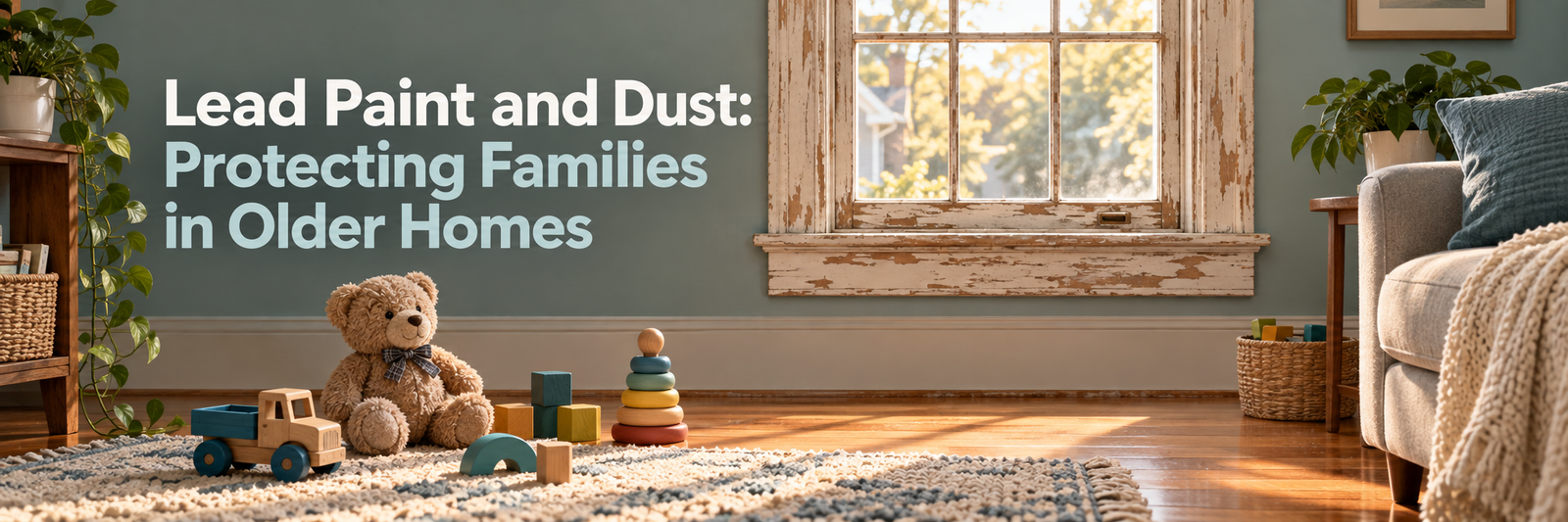
You fell for the house. The woodwork, the thick old doors, the windows with real character. Then somewhere between the closing paperwork and the first week of unpacking, a thought landed: this place was built before 1978, and the paint might be a problem.
Now you’re watching your toddler crawl across the living room floor, hands going straight to the mouth, and you can’t un-think it. Is the paint on the walls the issue? The windows? That chipped spot by the back door? Everything you find online either sounds like panic or like a shrug.
I run ZeoliteForDetox.com, and I wrote this as the calm, practical walk-through I wish more families had. We’ll cover where the real risk comes from, what a home like yours is likely hiding, which habits make a difference, when a project becomes dangerous, and how to find out what’s actually in your house. By the end, you’ll know what to do and in what order.
Table of Contents
Why Pre-1978 Homes Are the Risk Pool
In 1978, the federal government banned lead-based paint in housing. That date is the dividing line. A home built before 1978 may have lead paint somewhere inside it, and a home built after it generally isn’t part of this conversation.
The word “may” matters, because plenty of older homes have been stripped, repainted, or partially renovated over the decades. But you can’t tell by looking. A fresh coat of paint from five years ago could be sitting on top of layers from a much earlier era.
The age of the house tells you a lot. The older the home, the more likely it is to contain lead paint, and the more lead that paint tends to hold. A house from the early 1900s is a very different proposition from one built just before the ban. Older homes have also had more years of wear, more repaint cycles, and more chances for old layers to get disturbed.
So if your home predates 1978, treat it as a house with a question mark that deserves a real answer. That’s all it takes to get started.
It’s the Dust, Mostly
Most people picture a kid eating paint chips. That happens, but it isn’t the main story in most homes. The more common route is dust.
Think about the parts of a house that rub, slide, and slam. Windows that go up and down. Doors that swing and catch on their frames. Drawers, stair rails, and anything else where one painted surface grinds against another. Every time that happens, a little paint wears away into very fine particles. If old lead paint is in those layers, the dust carries lead.
You can’t see it. It doesn’t look like anything. It drifts, settles on window sills and floors, and gets tracked from room to room.
Floors are where it matters most for families with young kids. Children crawl, play, roll toys around, and put their hands in their mouths constantly. Dust on the floor ends up on their hands, then on their toys, then in their mouths. Kids also absorb far more of the lead they swallow than adults do, so the same amount of dust is a bigger deal for a child than for you.
That’s why the focus belongs on dust control. If you keep the dust down, you’ve addressed the most common route by which lead paint reaches children.
Everyday Controls That Matter
Nothing here is dramatic. These are habits, and they work because they target the dust directly.
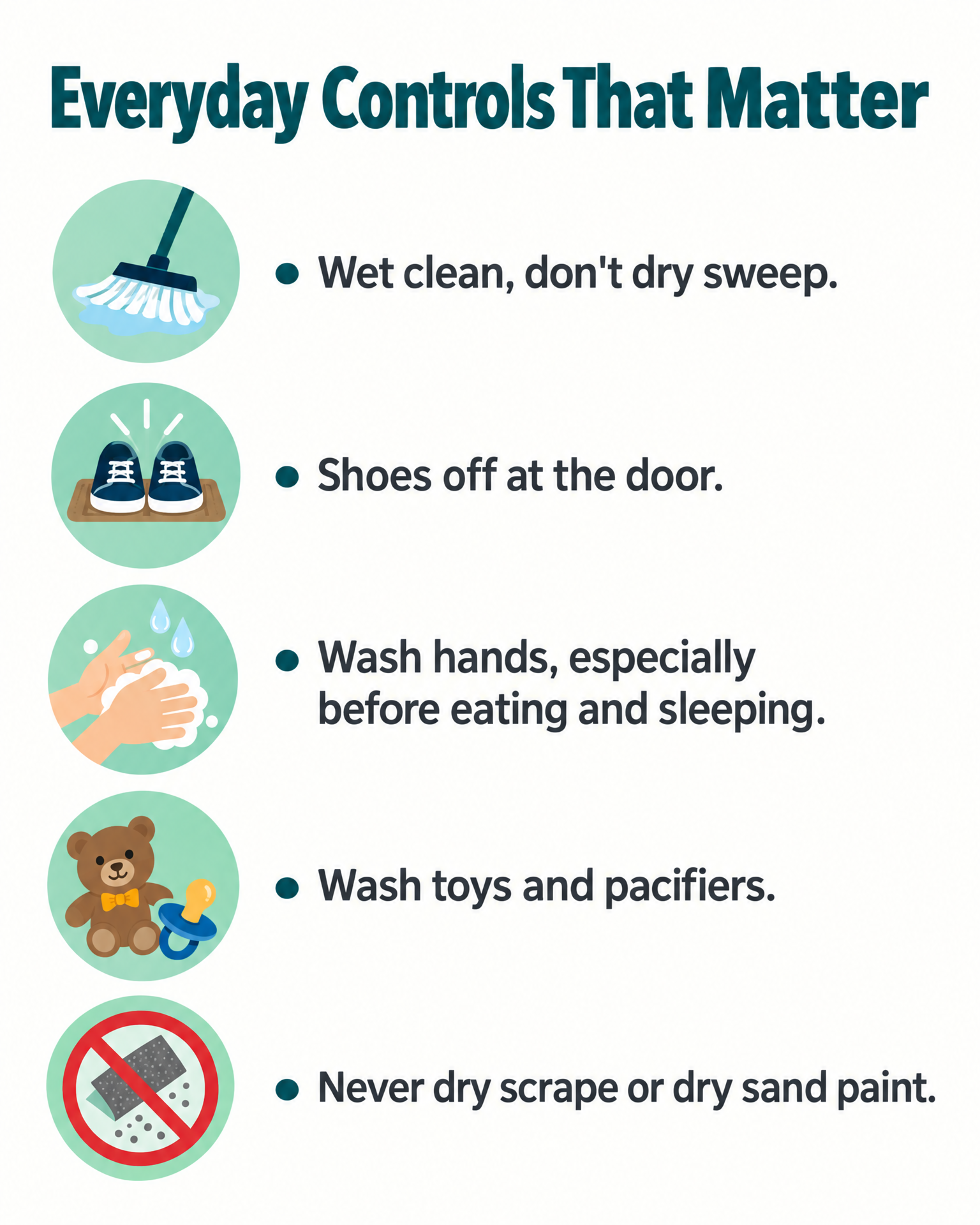
Wet clean, don’t dry sweep. Dry sweeping and dusting with a dry cloth kick fine particles into the air and spread them around. Use damp cloths or a wet mop on floors, window sills, and window wells. Rinse the cloth or mop head often, and don’t just push dust from one spot to another. Window sills and the tracks where windows slide are the first places to hit, since that’s where friction makes the dust.
Shoes off at the door. Soil and dust ride in on footwear. A shoes-off rule at the entrance cuts down on what gets tracked across the floors where your kids play. A doormat outside helps too.
Wash hands, especially before eating and sleeping. For small kids, this is one of the most useful habits you can build. Dust on hands goes straight to the mouth. Wash hands after play and before meals and naps.
Wash toys and pacifiers. Anything that lives on the floor and goes in a mouth collects dust. Wash toys regularly, and rinse any pacifier that drops.
Never dry scrape or dry sand paint. This is the one hard rule in the group. Dry scraping, dry sanding, and burning or heat-stripping old paint turn a stable surface into a cloud of lead dust and chips. If a spot is peeling and you feel the urge to fix it right now with a scraper, stop. That impulse is how an ordinary house becomes a hazard.
Keep kids and pregnant family members out of any area where paint is chipping or being disturbed, and keep chips and dust from getting into rugs, furniture, or play areas.
Lead paint is one item on a bigger list, so if you want to cover the rest of the house, my home toxins checklist walks through it room by room.
The Renovation Danger Zone
If there’s one moment when lead exposure in an older home jumps, it’s a renovation. Tearing out a wall, sanding trim, replacing windows, stripping a porch, or scraping a ceiling all create dust in volume. This is the classic exposure spike, and it’s how a family living in a manageable house ends up with a serious problem.
The scary part is how ordinary the work looks. A weekend project, a contractor with a sander, a kitchen remodel. Nothing about it feels dangerous, and the dust drifts through the whole house, settling into carpets, vents, and the floors your kids are playing on.
This is why the EPA created the Renovation, Repair, and Painting rule, usually called the RRP rule. It requires certified firms for renovation work that disturbs paint in pre-1978 housing. Certified firms are trained in lead-safe work practices: containing the work area, controlling dust, and cleaning up properly afterward.
So for any pre-1978 home, treat this as a plain rule: hire a certified firm for work that disturbs paint. Ask any contractor whether they’re certified under the RRP rule before you sign anything. If they shrug or get vague, move on. A contractor who works lead-safe is not an upsell. It’s the baseline.
Plan around the work as well. Think about where your family will be while it’s happening, and don’t let kids or pregnant family members stay in the house during dusty work if you can help it. Lead can be stored in bones and released during pregnancy, so a pregnant person’s exposure matters well beyond the day it happens.
If you’re doing small jobs yourself, stay conservative. When in doubt, don’t disturb the paint. Get it assessed first.
Testing the Home
At some point, guessing stops being useful. You want to know what’s actually in your house. There are two main ways to go about it, and they’re not equal.
Dust wipe testing measures lead in the dust itself, which is the thing that matters most. A sample is taken from a floor, window sill, or window well and sent to a lab. The result tells you whether the dust in that spot carries lead, and that reflects what your family might actually be touching and swallowing.
Certified inspectors and risk assessors are the professional route. An inspector can determine whether lead-based paint is present in the home. A risk assessor goes further and identifies where lead hazards exist, such as deteriorating paint, dust, and friction surfaces, and tells you what to do about them. If you’re buying an older home, planning renovations, or have a young child in the house, this is the most complete answer you can get.
DIY kits are the convenient option, and they have limits. They can be a quick way to check a specific spot, but they’re not a substitute for a professional assessment, and a negative result from a store-bought kit shouldn’t be treated as a clean bill of health for the whole house. Use them as a rough screen at most. If the stakes are real, because there’s a baby, a pregnancy, or a renovation coming, pay for a pro.
Testing the house is one half of the picture. The other half is testing the people in it. Children in older homes are often screened with a blood lead test, and the CDC’s blood lead reference value for children is 3.5 µg/dL. The CDC also states that no safe blood lead level in children has been identified. That is exactly why the goal is to keep exposure as low as you can, rather than aim for some acceptable amount. If you want to know when and how to get tested yourself or for your kids, my guide on heavy metal testing and when to get tested covers it.
Straight Talk: Intact Paint Is Manageable; Disturbed Paint Is the Emergency
Here’s the honest bottom line. Lead paint that is intact, meaning it’s in good shape, not chipping, not peeling, not being rubbed or scraped, is a manageable situation. Lots of families live in older homes safely by keeping paint in good condition, controlling dust, and not disturbing surfaces carelessly. You don’t have to sell the house or move out.
Disturbed paint is a different story. Peeling, chipping, crumbling, sanded, scraped, or torn out during a renovation, it becomes an emergency. That’s when dust and chips fill the air and land on the floor. If you see deteriorating paint in a home with young children, don’t wait on it. Keep kids away from the area, don’t try to scrape it up yourself, and get a certified professional in to assess and fix it properly.
I’m not going to tell you what your child’s blood lead level should be, or interpret a result for you. If you’re worried about exposure in a particular person, especially a baby, a toddler, or someone who’s pregnant, that’s a conversation for your doctor.
Questions People Ask Me
Do I have to remove all the lead paint in my house?
Not necessarily. Intact paint in good condition can often be managed with good habits and regular monitoring. What needs attention is paint that’s deteriorating, paint on surfaces that rub or get hit, and any paint that will be disturbed in a renovation. A certified risk assessor can tell you which of those apply to your home.
Can I just paint over it?
Painting over lead paint isn’t the same as dealing with it. It’s not a good fit for surfaces that rub, like windows and doors, and the prep work is where people get into trouble, because sanding or scraping to prepare a surface is exactly the dry disturbance you want to avoid. If a surface is in bad shape, get professional guidance before you touch it.
Why are young children at the most risk?
Children absorb far more of the lead they ingest than adults do, and their hand-to-mouth behavior raises their exposure further. They spend time low to the ground, where dust settles, and they touch everything. That combination is why dust control and hand washing matter so much with little ones.
Is a home test kit from the hardware store enough?
It’s fine as a quick look at a specific spot, but it doesn’t replace a professional assessment. If you’re making real decisions, such as buying a home, renovating, or living with a baby or toddler, a certified inspector or risk assessor, along with lab-analyzed dust wipes, gives you far more reliable information.
What if I’m pregnant or planning to be?
Lead can be stored in bones and released during pregnancy, which is one reason to take exposure seriously beforehand and to stay well away from any renovation or paint disturbance. Talk with your doctor about your situation and any testing that makes sense.
Where to Go Next
Once the paint and dust question is under control, the next step is widening the lens. Lead in a home doesn’t only come from walls. If you’re thinking about how heavy metal exposure affects expecting parents and kids specifically, read my guide on heavy metal exposure in pregnancy and childhood. It covers why these life stages matter so much and what families can do.
Water is the other common route in older houses, since plumbing ages along with the paint. My piece on how to reduce lead exposure from drinking water takes you through that.
And when you’re ready to evaluate products of any kind, start by getting a clear picture of what you’re actually dealing with. The heavy metal testing guide will help you figure out when testing makes sense and what to ask for. Knowing where your exposure actually comes from is what makes every later decision a better one.
Recent Posts
You're standing in the water aisle, or scrolling a product page, and every box says some version of "reduces lead." The pitcher says it. The faucet attachment says it. The no-name filter at half the...
If you're pregnant, trying, or raising small kids, you've probably run into the headlines. Lead in this, arsenic in that, mercury in something you were told was healthy last year. Each one reads like...